
Using the key below, answer the questions based on how strongly you agree or disagree with the statement. (Approx. 3 minutes)
Do I have HSDD? Quiz
This quiz is not intended for use in the diagnosis of disease or other conditions, or in the cure, mitigation, treatment or prevention of disease.
Do I have HSDD? Quiz
Using the key below, answer the questions based on how strongly you agree or disagree with the statement. (Approx. 3 minutes)
This quiz is not intended for use in the diagnosis of disease or other conditions, or in the cure, mitigation, treatment or prevention of disease.
Processing your answers...
Your Desire, Decoded.
Based on your answers, you may be suffering from HSDD. HSDD, characterized as frustrating low libido, is the most common form of sexual dysfunction in premenopausal women. While prevalence rates vary, it is estimated that about one in ten women have HSDD.
The good news? HSDD can be treated.
Click below and start your online consultation today for only $49 $19 to see if Addyi is right for you.
Your Desire, Decoded.
Based on your answers, you may be suffering from HSDD. HSDD, characterized as frustrating low libido, is the most common form of sexual dysfunction in premenopausal women. While prevalence rates vary, it is estimated that about one in ten women have HSDD.
The good news? HSDD can be treated.
Click below and start your online consultation today for only $49 $19 to see if Addyi is right for you.
Your Desire, Decoded.
Based on your answers, you may be suffering from HSDD. HSDD, characterized as frustrating low libido, is the most common form of sexual dysfunction in premenopausal women. While prevalence rates vary, it is estimated that about one in ten women have HSDD.
The good news? HSDD can be treated.
Click below and start your online consultation today for only $49 $29 to see if Addyi is right for you.
Your Desire, Decoded.
Based on your answers, you may be suffering from HSDD. HSDD, characterized as frustrating low libido, is the most common form of sexual dysfunction in premenopausal women. While prevalence rates vary, it is estimated that about one in ten women have HSDD.
The good news? HSDD can be treated.
Click below and start your online consultation today for only $49 $29 to see if Addyi is right for you.
Your Desire, Decoded.
Your score indicates that you have a healthy or high level of sexual desire. You likely experience regular sexual thoughts and fantasies and engage in intimacy with enthusiasm. Maintaining open communication with your partner and fostering emotional connection can further enhance your sexual well-being.
Your Desire, Decoded.
Your score indicates that you have a healthy or high level of sexual desire. You likely experience regular sexual thoughts and fantasies and engage in intimacy with enthusiasm. Maintaining open communication with your partner and fostering emotional connection can further enhance your sexual well-being.
Important Safety Information
What is the most important information I should know about ADDYI?
ADDYI can cause severe low blood pressure and fainting (loss of consciousness). Your risk is higher if you drink alcohol close to your dose. Do not take ADDYI with certain medicines or if you have liver problems. To lower your risk of low blood pressure and fainting:
- Do not drink alcohol close to the time you take ADDYI. Skip your dose if you had 3 or more drinks before bedtime. Wait at least 2 hours after 1–2 alcoholic drinks before taking ADDYI. After taking ADDYI, do not drink alcohol until the next day
- Talk to your doctor about the medicines and supplements you take and before starting any new ones
- Do not take ADDYI if you have liver problems
If you feel dizzy or lightheaded after taking ADDYI, lie down right away. Get medical help if symptoms do not go away.
Who should not take ADDYI?
Do not take ADDYI if you:
take certain medicines that increase ADDYI levels in your blood (including some treatments for HIV, fungal infections, antibiotics, hepatitis C, heart conditions, or depression such as nefazodone)
- have liver problems
- are allergic to ADDYI
What should I tell my doctor before taking ADDYI?
Tell your doctor about all your medical conditions, including if you:
- drink alcohol, use drugs, or have a history of substance abuse
- have ever had depression or other mental health conditions
- have low blood pressure or a condition that can cause it
- are pregnant, planning pregnancy, or breastfeeding
Tell your doctor or pharmacist about all medicines and supplements you take, as they may interact with ADDYI.
What should I avoid while taking ADDYI?
- Do not drink alcohol close to your dose
- Do not drive or operate machinery for at least 6 hours after taking ADDYI
- Do not drink grapefruit juice
- Do not take supplements such as St. John’s Wort, ginkgo, or resveratrol, or certain medicines like cimetidine, without talking to your doctor
What are the possible side effects of ADDYI?
ADDYI can cause serious side effects, including:
- See “What is the most important information I should know about ADDYI?”
- sleepiness
- low blood pressure and fainting
The most common side effects include:
- dizziness
- nausea
- tiredness
- trouble sleeping
- dry mouth
This is not a complete list of side effects. Call your doctor for medical advice.
What is ADDYI?
ADDYI is a prescription medicine used to treat hypoactive (low) sexual desire disorder (HSDD) in women < 65 years of age who have not had problems with low sexual desire in the past, no matter the type of sexual activity, situation, or sexual partner, and it is troubling to them. Their low sexual desire is not due to a medical or mental health problem, problems in the relationship, medicine or other drug use.
ADDYI is not for use in men or to improve sexual performance.
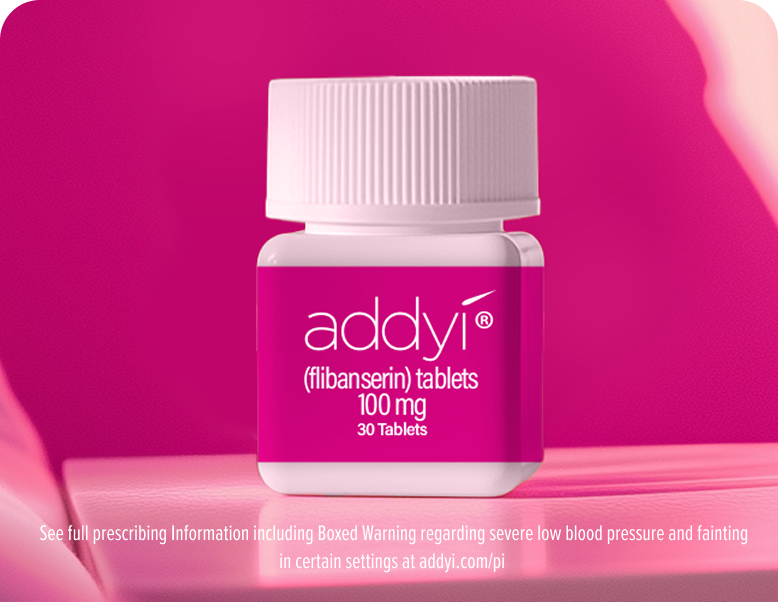
Find out if treatment is right for you.
Your online visit today is only $49 $19.
By clicking here you will go to a third-party telemedicine provider.
See full prescribing Information including Boxed Warning regarding severe low blood pressure and fainting in certain settings at addyi.com/pi
Find out if treatment is right for you.
Your online visit today is only $49 $19.
By clicking here you will go to a third-party telemedicine provider.